
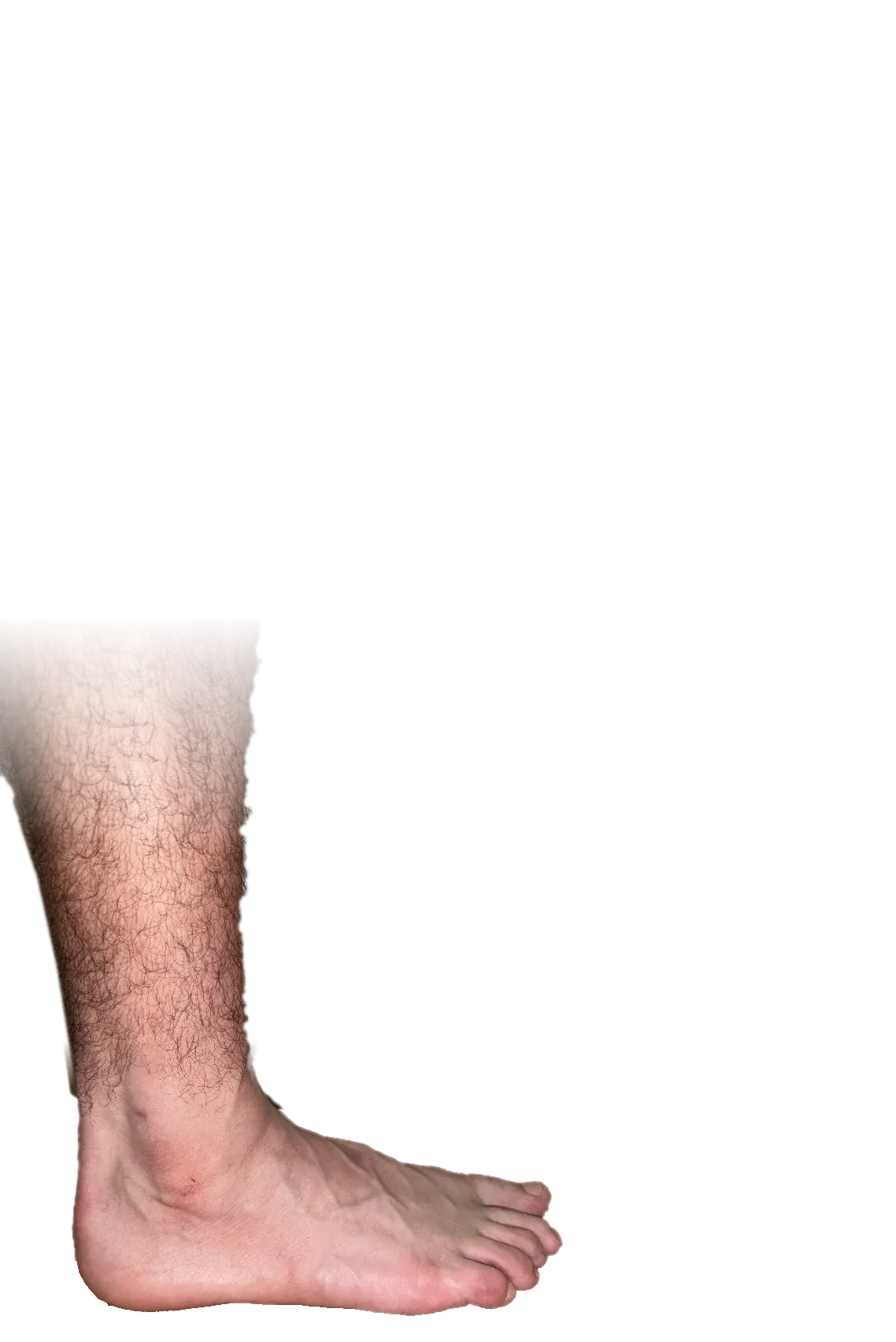
What it is
From the outside, the Achilles tendon is the firm cord at the back of the ankle, just above the heel.
Inside
The Achilles tendon connects the calf muscles to the heel bone. It provides the push-off for walking, running and standing on tiptoe.
In a rupture, the tendon tears a few centimeters above the heel, often during a sudden sprint or a jump. It feels like being kicked in the back of the leg. The ends pull apart and there is not enough strength to stand on tiptoe.
Treatment
A rupture can be treated with a boot and rehabilitation, or with surgery. In surgery, the two ends are brought together and sutured, through an open incision or through small incisions.
The choice depends on age, activity level and time since the injury. Every surgery has risks.
Afterwards
The tendon heals and becomes thicker at the repair site. The return to sport happens in phases, with physical therapy, over several months.
Results and recovery vary from person to person.
What I look at in the visit
- Achilles tendoncalf to heel
- Connects the calf to the heel and powers the push-off of each step.
- In the visit I look at: thickness, tender spots and strength on tiptoe.
- Calcaneusheel bone
- Takes the first impact of each step. The Achilles attaches at the back; the plantar fascia, underneath.
- In the visit I look at: whether the pain is at the back or underneath: it changes the diagnosis.
- Talusankle joint
- Sits between the leg and the heel and lets the foot move up and down.
- In the visit I look at: looseness and clicking when the ankle moves.
- Plantar fasciasole of the foot
- A firm band that supports the arch. When inflamed, it hurts under the heel with the first steps of the day.
- In the visit I look at: pain when pressing on its origin, at the heel.