
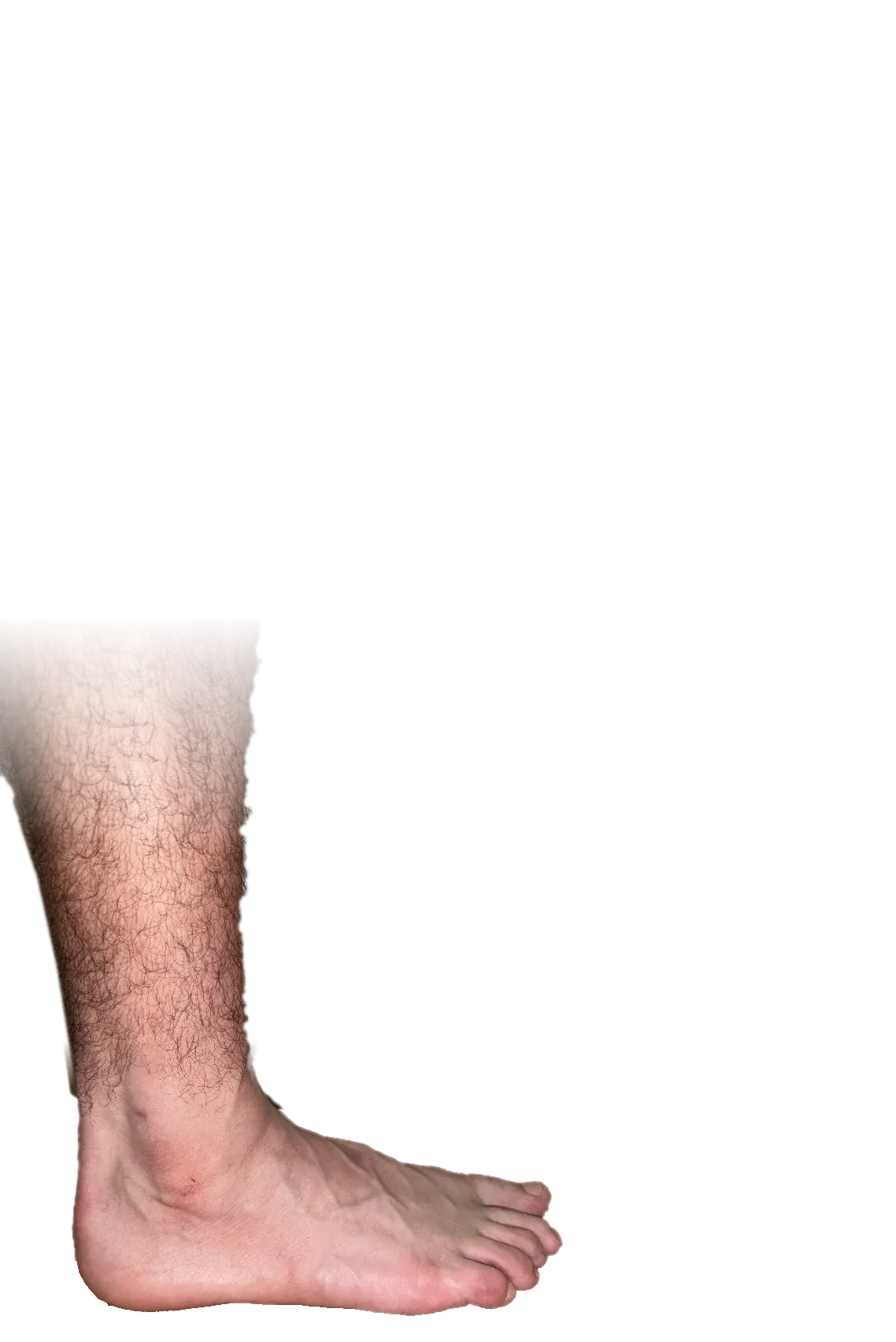
What it is
From the outside, the ankle has a bony bump on each side. The ligaments that tear most often sit just in front of and below the outer one.
How it often shows up: “Twisted the foot and weeks later it is still swollen”.
Inside
On the outer side of the ankle, short ligaments connect the fibula to the talus and the calcaneus. They are what hold the foot when you step awkwardly.
In an ankle sprain, the front ligament is the one that tears most often. Most heal with protection and physical therapy. When it heals loose, the talus moves too much and the ankle starts to give way.
Treatment
Most foot and ankle pain improves with the right shoes, insoles and physical therapy. Surgery is for when that does not work and the pain holds your life back.
If the instability persists after rehabilitation, the ligament can be repaired: it is reattached to the bone with small anchors and sutures.
In many cases arthroscopically. Every surgery has risks.
Afterwards
The repaired ligament once again limits the movement of the talus. Treatment includes strength and balance physical therapy, before and after.
Results and recovery vary from person to person.
What I look at in the visit
- Fibulaouter bone
- Its tip is the bony bump on the outer side of the ankle, where the ligaments that tear most often begin.
- In the visit I look at: pain when pressing on the bone, which may indicate a fracture.
- Talusankle joint
- Sits between the leg and the heel and lets the foot move up and down.
- In the visit I look at: looseness and clicking when the ankle moves.
- Ligamentsfibula to talus
- They hold the foot when you step awkwardly.
- In the visit I look at: anterior drawer and talar tilt tests, comparing both sides.
- Calcaneusheel bone
- Takes the first impact of each step. The Achilles attaches at the back; the plantar fascia, underneath.
- In the visit I look at: whether the pain is at the back or underneath: it changes the diagnosis.